
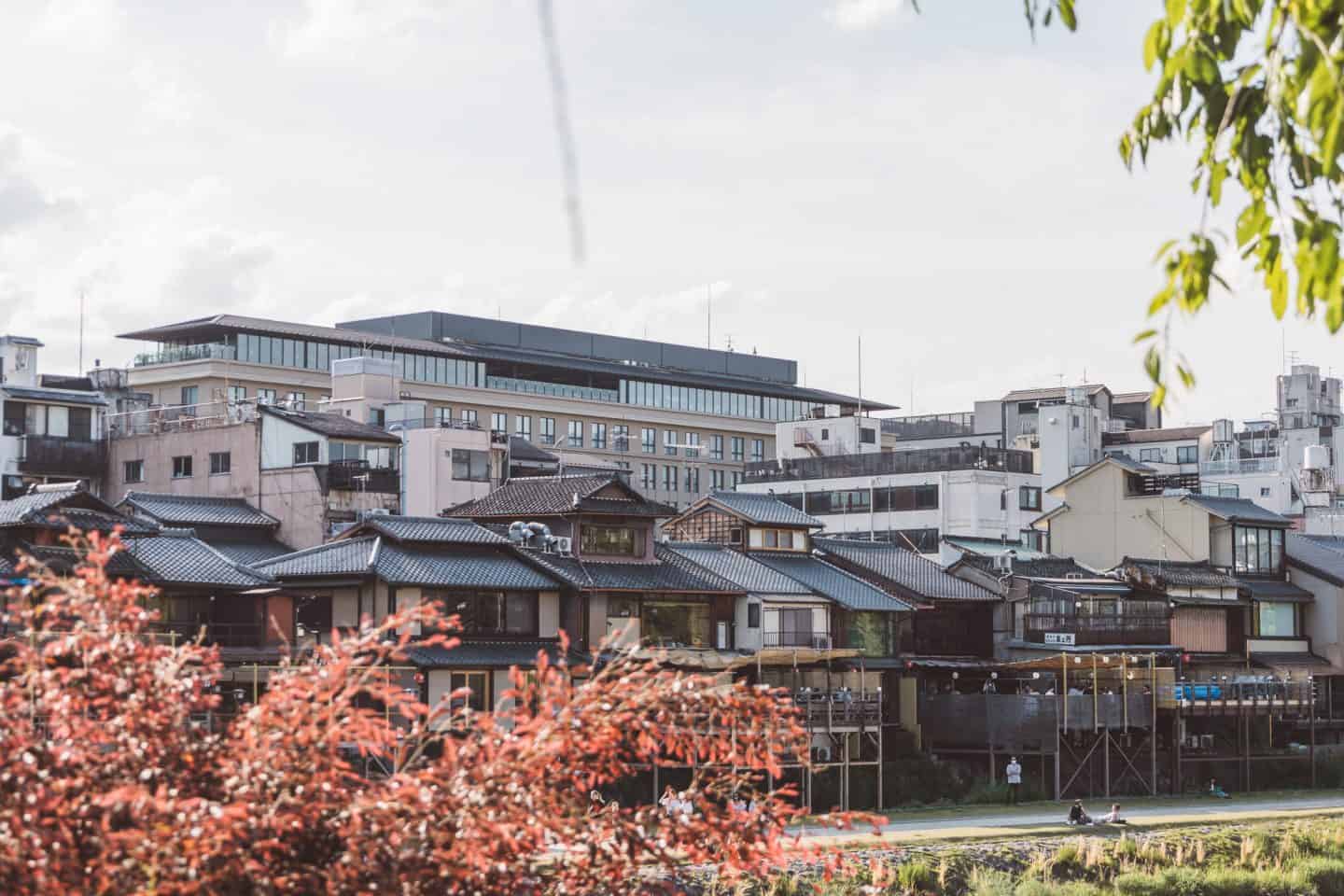
I’ll be honest with you… Kyoto took a little while to win me over. The first day felt overwhelming in the way that hugely anticipated places sometimes do. The crowds, the heat, the sense that you’re seeing everything through a lens of other tourists doing the exact same thing. I remember thinking, “is this it?”
It wasn’t until I slowed down, wandered into a restaurant on a local’s recommendation, sat across from a sake expert who taught me about sake that Kyoto started to reveal itself. And when it did, its like a lightbulb went off. I thought, “Now I know what everyone loves about Kyoto!” There’s a quiet spirituality to this city that you can’t access from a packed tour bus or a midday temple queue. You have to find it on your own.
This two day itinerary is built around that idea. Two days gives you the right mix of iconic and off-the-beaten-path. Here is the best way to spend 2 days in Kyoto as a first time visitor.
How to Get to Kyoto
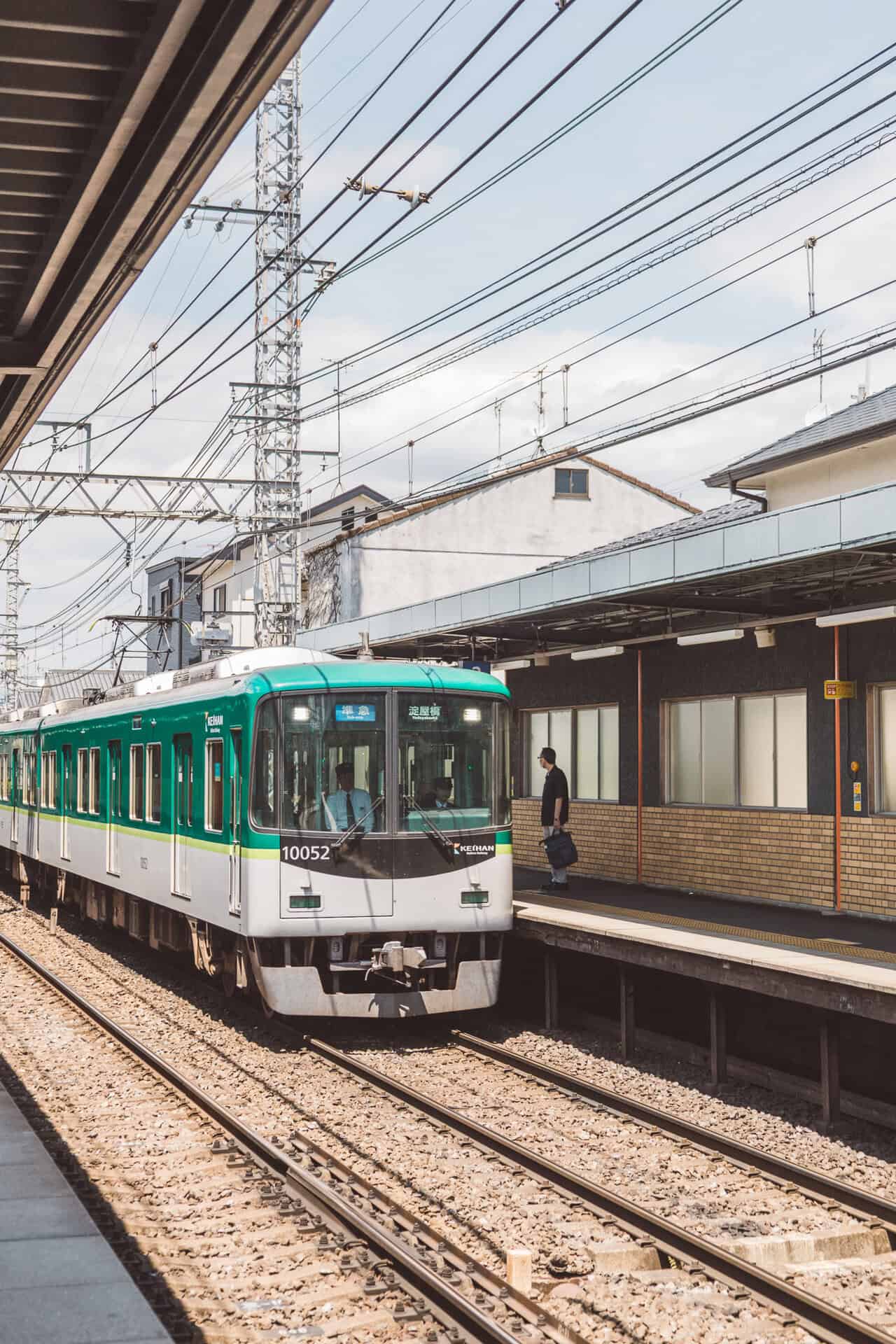
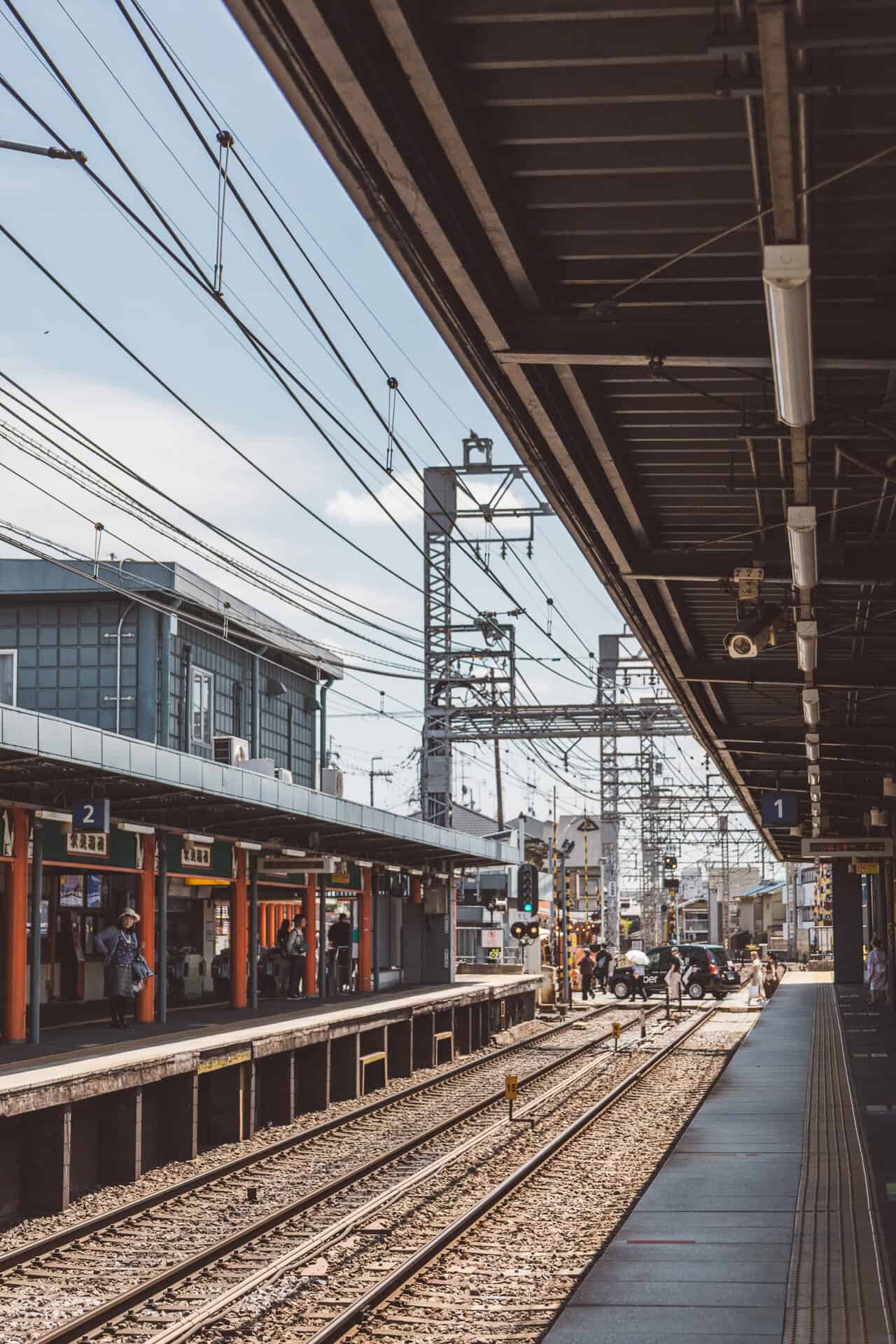
If you’re coming from Tokyo (which most first-timers are), the shinkansen – bullet train – is the best way to get to Kyoto. The bullet train from Tokyo Station to Kyoto Station takes about 2 hours and 15 minutes and is incredibly easy to navigate. Plus you get the chance to see Mount Fuji through your window at 200 miles per hour! (For this, you’ll need to be sitting on the right hand side of the train).
Tickets run roughly ¥13,000-¥14,000 ($85-$95 USD) each way without a rail pass. If Kyoto is your first and only stop and you’re not bouncing between a lot of cities, buying individual tickets is usually the smarter financial call. Otherwise, you can purchase the JR Pass if you’re visiting multiple cities in Japan. I recommend running the numbers on your specific itinerary before committing either way.
From Kyoto Station, most of the city’s main sights are accessible by bus or taxi, and the station itself is easy to navigate even if it’s your first time in Japan. English signage is everywhere and locals are ready and willing to help out should you need it.
Get your train tickets to Kyoto here!
Where to Stay in Kyoto
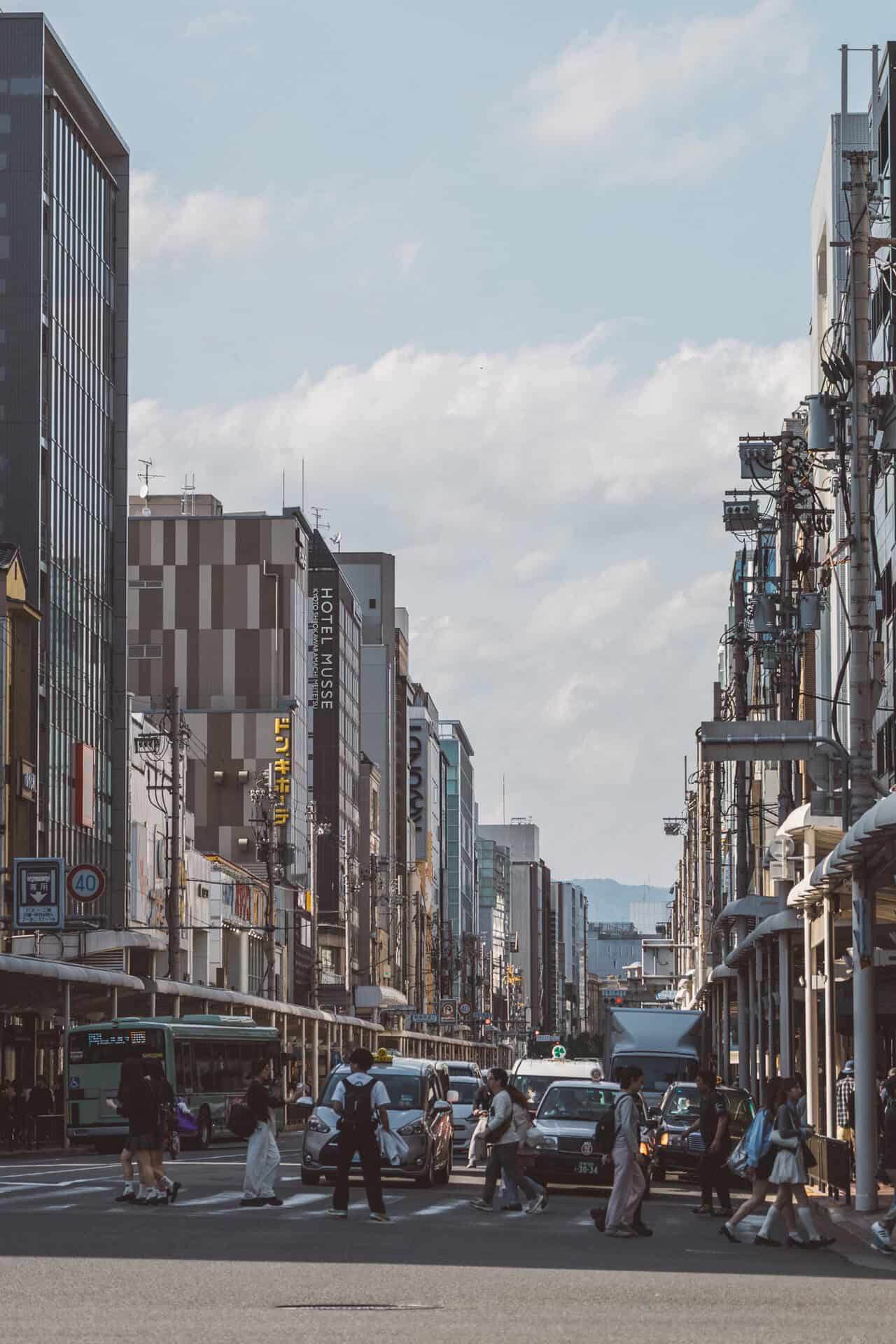
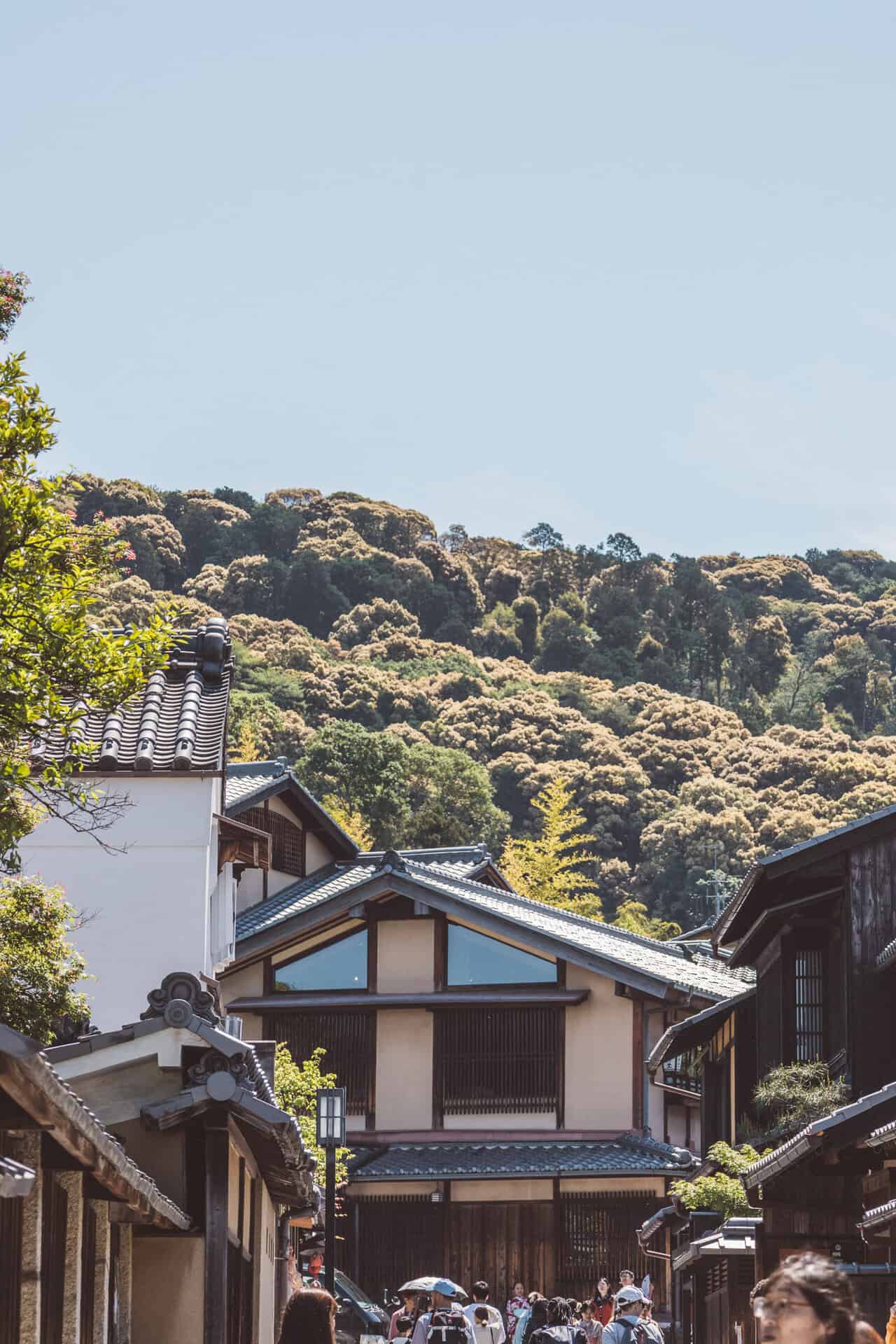
Kyoto is a walkable city, but where you base yourself can make a big difference. The Higashiyama district puts you within walking distance of Kiyomizudera, Ninenzaka, and the Gion geisha quarter… ideal if you want to be in the middle of everything. The area around Kyoto Station is convenient for day trips and transportation but feels less like Kyoto and more like a transit hub.
We stayed at the Mitsui Garden Hotel Kyoto Kawaramachi Jokyoji, a no-fuss hotel, central to everything. Other hotels I’d recommend include…
- Gion Misen Furumonzen
- Sora Niwa Terrace Kyoto
- The Gate Hotel Kyoto Takasegawa by Hulic
- Yugen Kyoto Shijo
Book your stay in Kyoto here!
Day 1 in Kyoto: Markets, Geishas, & More
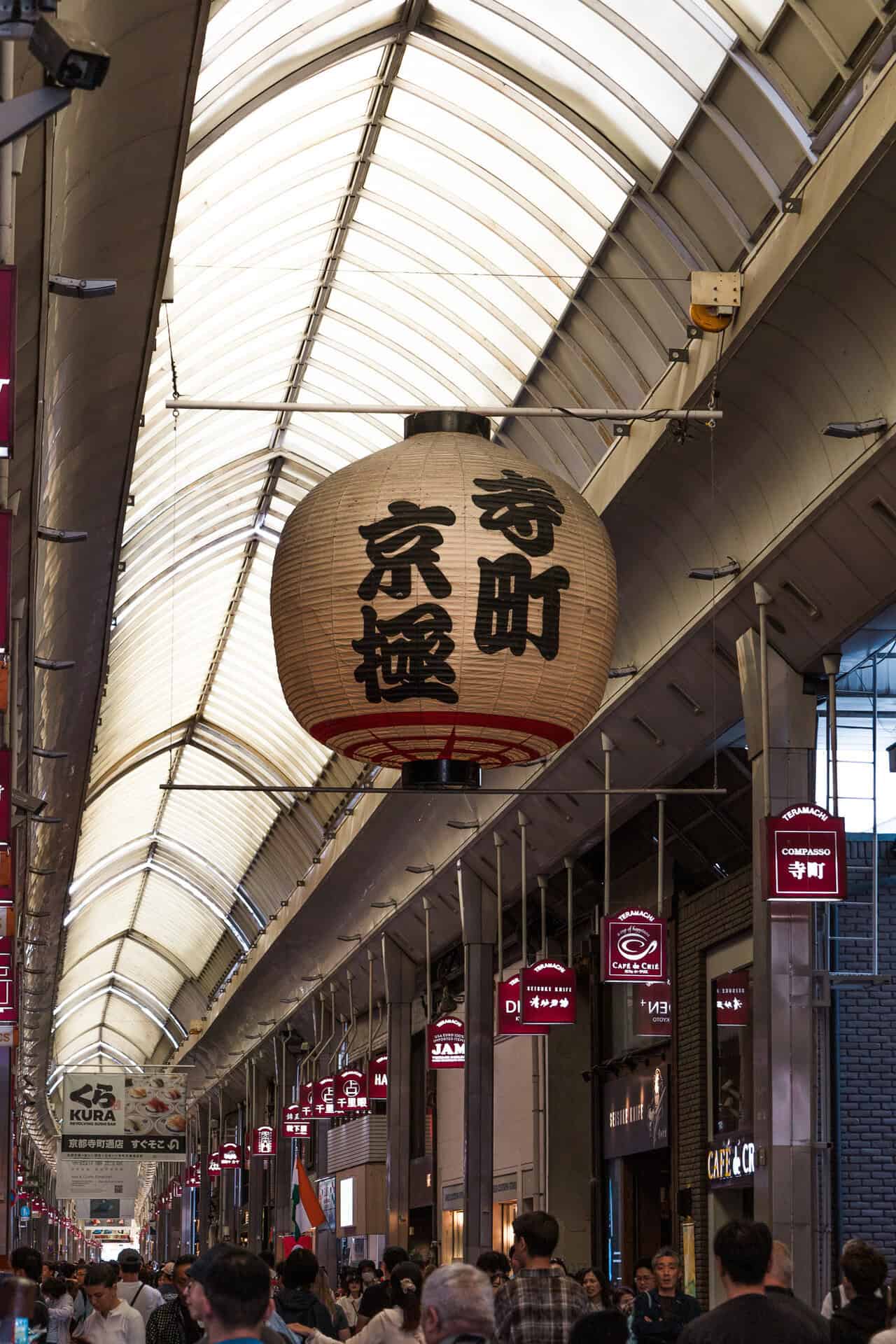
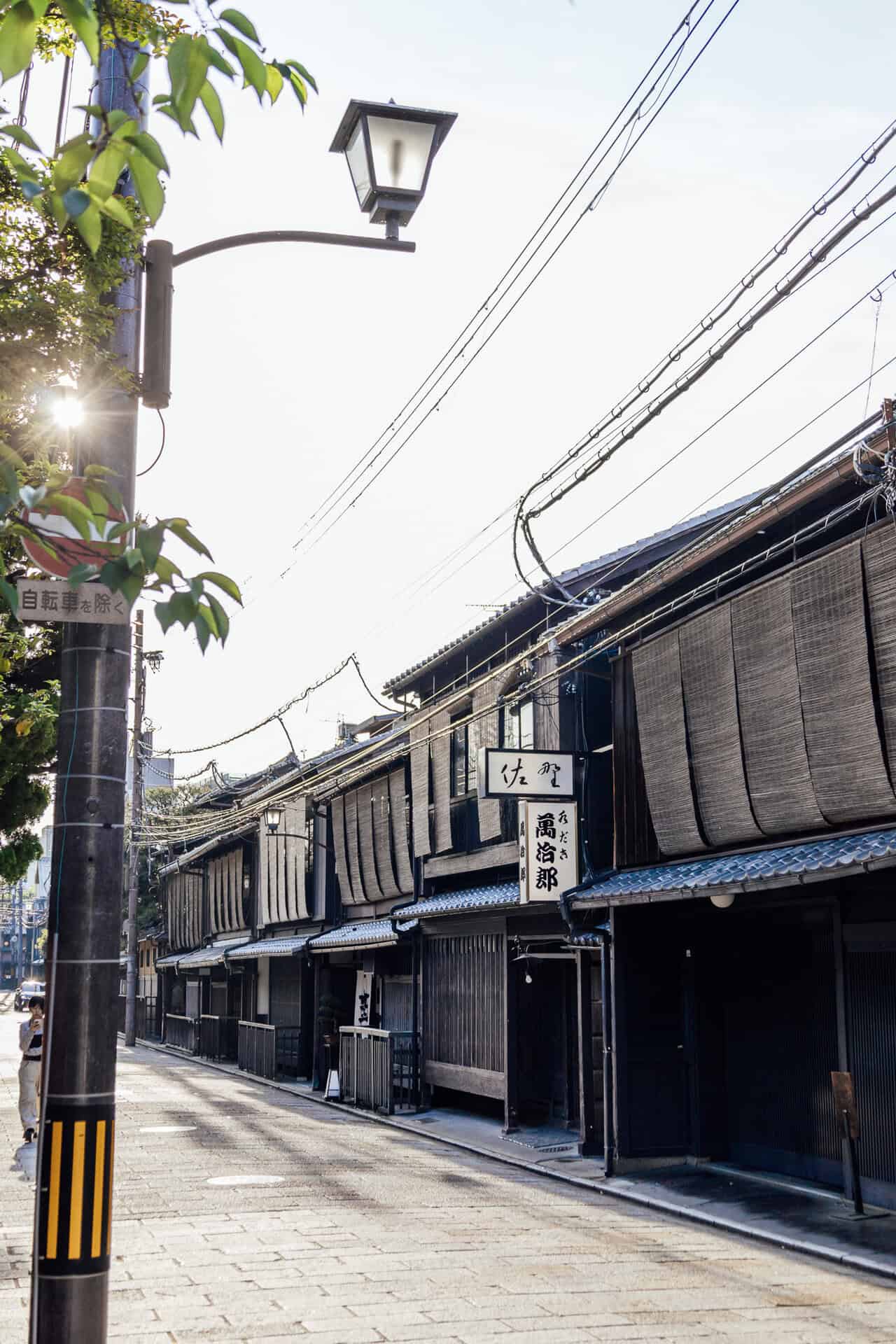
If you’re arriving from Tokyo on the midday shinkansen, you’ll pull into Kyoto Station around 1pm which is the perfect time to drop your bags and head straight to lunch.
Lunch at Nishiki Market
Nishiki Market is a five-block covered arcade in the heart of downtown Kyoto, known locally as “Kyoto’s Kitchen.” It’s been feeding the city for over 400 years; think stall after stall of pickled vegetables, fresh tofu, skewered seafood, sushi, matcha… everything you could possibly think of! Just make sure to go hungry.
While you’re there, make a point of stopping into Aritsugu, a knife shop that has been operating out of Nishiki Market since 1560. Even if you have zero interest in buying a knife, it’s worth checking it out. The craftsmanship on display is something else entirely, and the staff are patient and genuinely happy to walk you through what makes each blade different.
Geisha Walking Tour in Gion
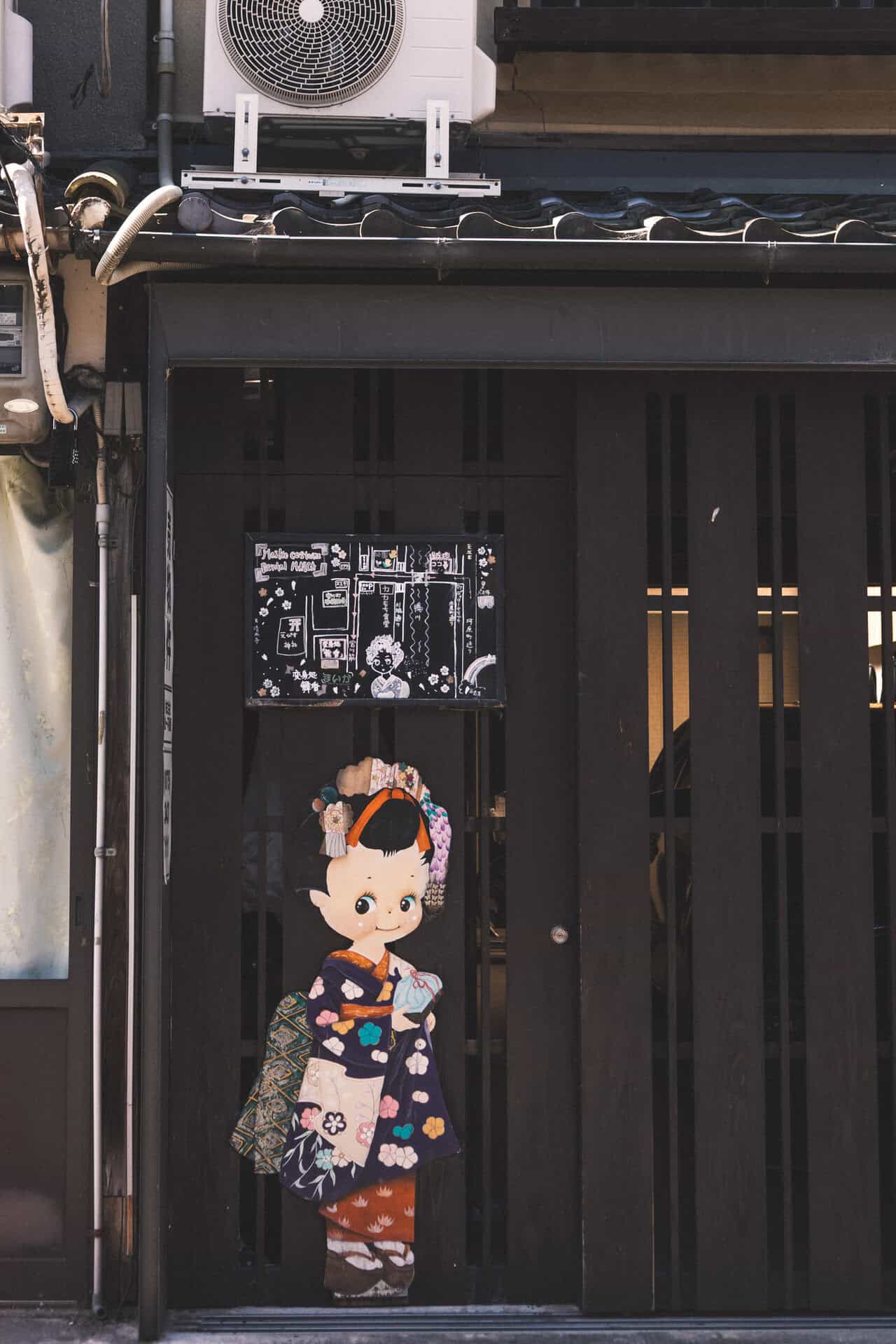
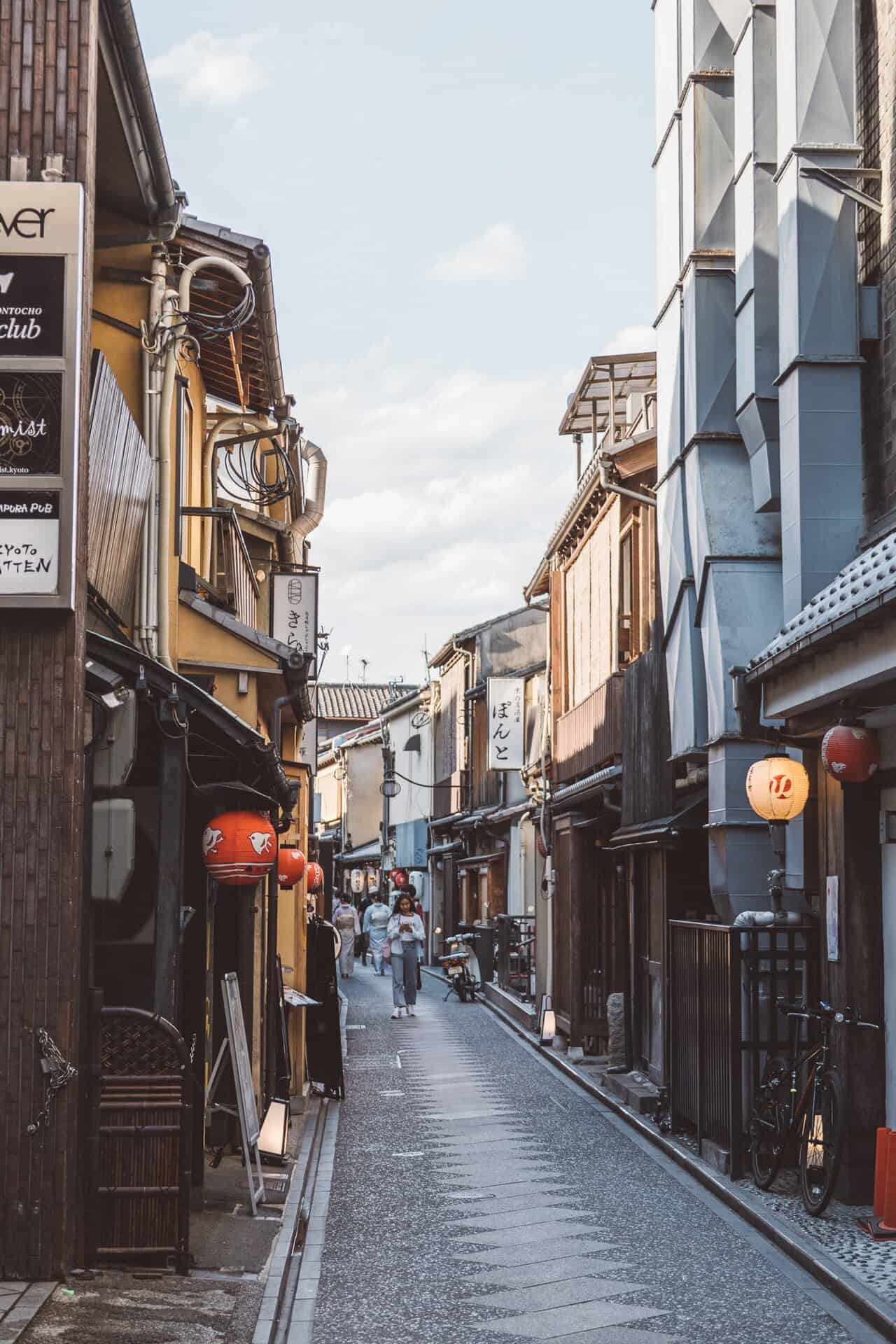
By late afternoon, make your way to the Gion district for a geisha walking tour – and if this is the only thing you book in advance for Kyoto, make it this. Gion is Kyoto’s most famous geisha quarter, a neighborhood of wooden machiya townhouses and narrow lantern-lit lanes where geisha and maiko (geisha’s in training) still walk around (for appointments) today.
This Geisha tour starts at 4pm (with several running throughout the night), and it was my favorite thing that I did in Kyoto. Your guide will be able to walk you through the history of the district, explain the difference between geisha and maiko, and position you in the right places at the right times. It’s not a guarantee you’ll spot one, but the odds are good in the early evening – and the neighborhood itself is worth it regardless.
Book your Geisha walking tour here!
Cocktails & Dinner
After the tour, I’m of the opinion that you’ve earned yourself a good cocktail. There are two places I’d recommend – Bee’s Knees, a speakeasy tucked into the backstreets of Kyoto; and/or Rocking Chair – a snug, wood-paneled bar. I loved both of them equally and would encourage you to try out both if you have time.
For dinner, head to Kyo Apollo – my favorite restaurant in Kyoto. This was such a great find after asking one of the bartenders what his favorite restaurant was. It felt like a true local experience tucked away from the busy, tourist packed streets of Kyoto.
Day 2 in Kyoto: Temples, Philosopher’s Path & More
Fushimi Inari Taisha
This might be controversial, but I was not a fan of Fushimi Inari Taisha. However, it is one of the most spiritual sites in Kyoto so if it’s something you’re interested just make sure to arrive early! The shrine is one of the most visited sites in all of Japan, and the difference between arriving before 8am and arriving at 10am is the difference between a spiritual experience and being shoulder to shoulder with hundreds of other tourists.
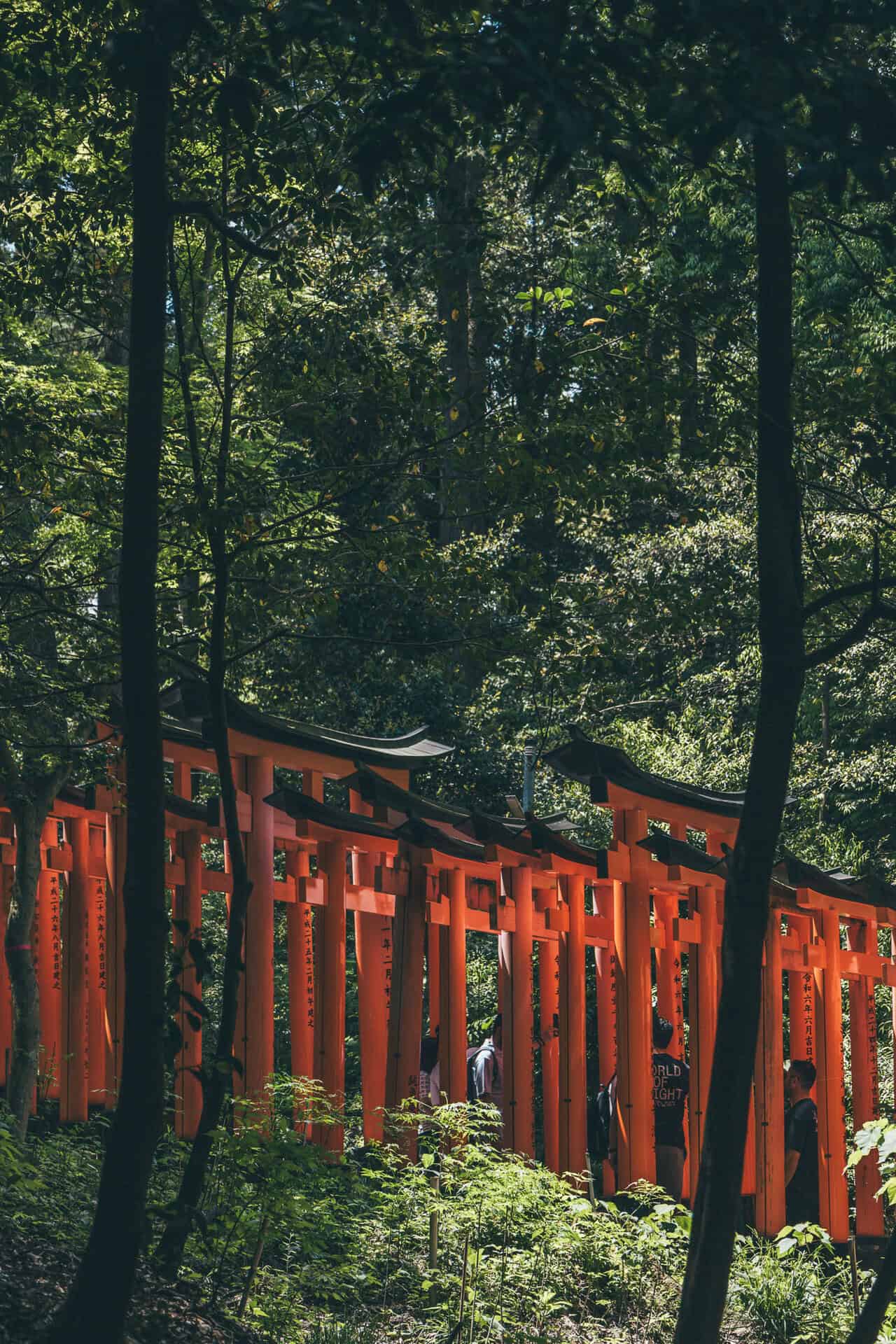
For some context, the shrine is dedicated to Inari, the Shinto god of rice and prosperity, and is famous for its thousands of torii gates that wind up the forested slopes of Mount Inari. The gates have been donated by businesses over centuries – you’ll notice names and dates inscribed on each one; there are roughly 10,000 of them in total.
Entry is completely free and the shrine is open 24 hours. You don’t need to hike to the summit (a full round trip takes 2-3 hours) – most people turn around at the Yotsutsuji intersection about halfway up, where there’s a viewpoint over southern Kyoto. That’s about 45-60 minutes and allows you to see the best of the shrine without the full commitment.
If you’re not interested in visiting Fushimi Inari Taisha, an alternative option would be to participate in a traditional tea ceremony. I did this one and thoroughly enjoyed learning about the ritual and seeing more Japanese culture.
Book a traditional tea ceremony here!
Philosopher’s Path
From Fushimi Inari, make your way back toward central Kyoto and head to the northern end of the Philosopher’s Path. The path follows a narrow canal for about 1.2 miles through the Higashiyama district, lined with cherry trees and dotted with small temples, and cafés. It was named for the philosopher Nishida Kitaro, who walked it daily as a meditative practice.
Walk south from Ginkakuji (the Silver Pavilion) toward Nanzen-ji, and take your time. Along the way, Honen-in Temple is worth a short detour – it’s quieter than most, with a thatched gate and moss-covered grounds that feel a world away from the busier sites. Eikando Temple is another temple worth the stop.
Ninenzaka, Sannenzaka, Kiyomizu-dera
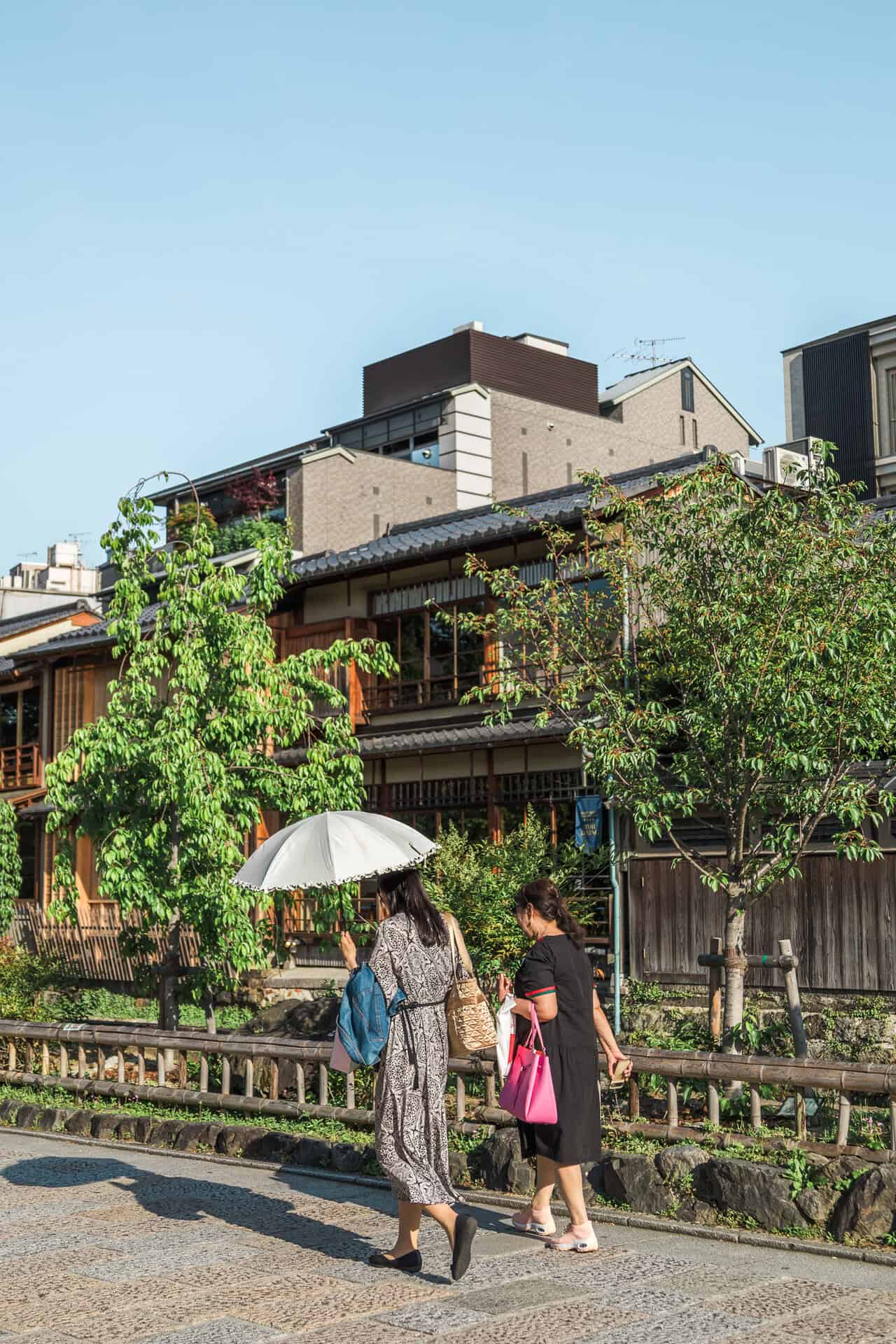
From the southern end of the Philosopher’s Path, the cobblestone streets of Ninenzaka and Sannenzaka are a short taxi ride away (or a longer walk if you’re up for it). You’ll notice the well-preserved lanes are lined with wooden shops selling ceramics, matcha sweets, and every Kyoto souvenir you can imagine. It does get very crowded in the afternoon, but I still think that it’s worth it.
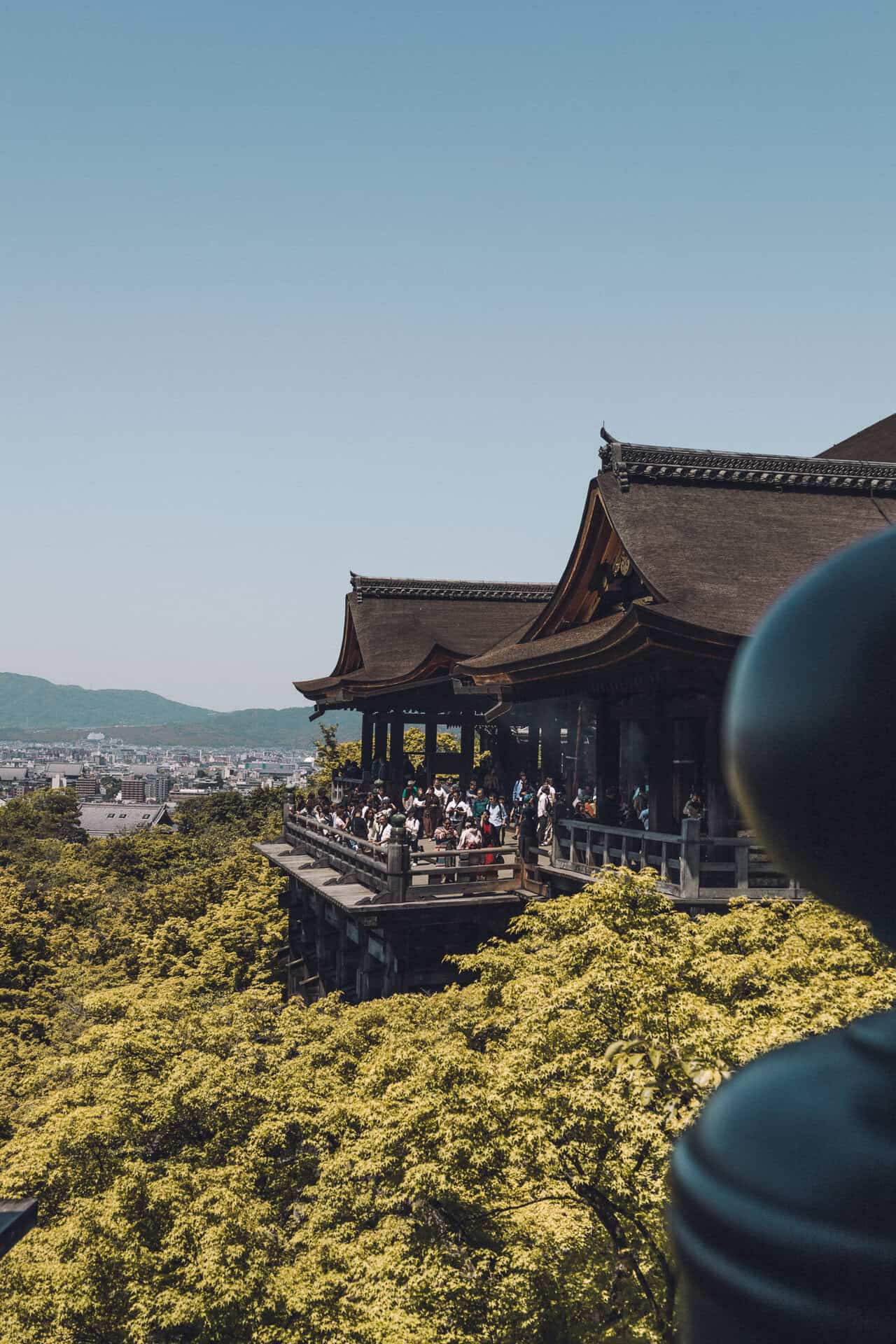
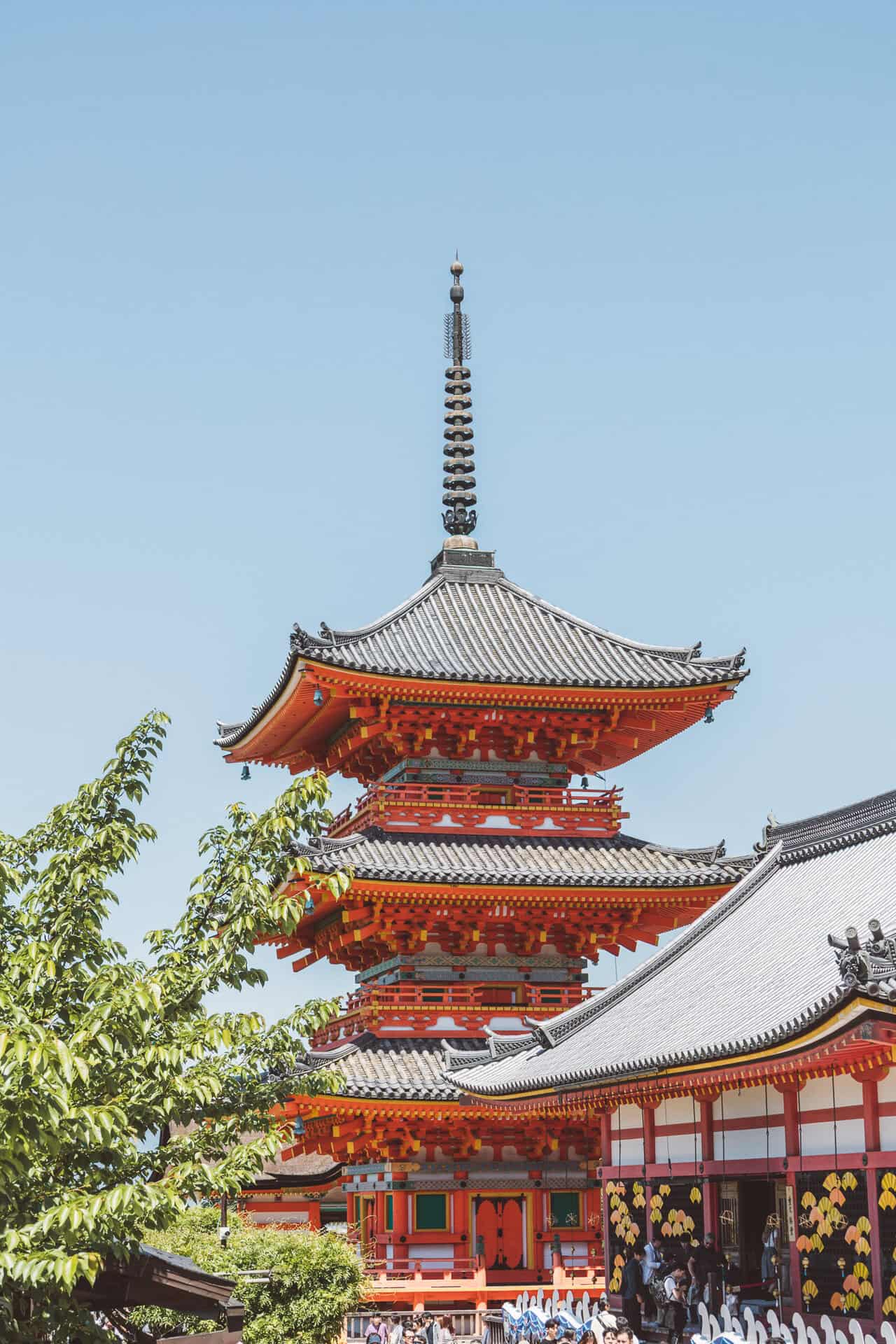
At the top of the hill sits Kiyomizu-dera, one of Kyoto’s most iconic temples – a wooden structure built without a single nail, jutting out over the hillside on a platform of ancient timber supports. Entrance costs ¥500 (about $3.50 USD) and I’d allow at least an hour, making sure to walk around the full complex rather than just the main hall. The views over the city from the wooden stage are pretty incredible.
Dinner & Cocktails
For your final night in Kyoto, I’d recommend one of the following restaurants – Wagyu Volcano-Steak OAGARI, Gion for traditional Japanese wagyu. Or Kyoto Gion Tonkatsu Wadafuku for tonkatsu. Both restaurants are casual, but incredible. And for cocktails, head to the local bar – Full Hooking Kyoto Gion.
Bonus Places to Visit in Kyoto
If you have more time, there are two more places in town that I thoroughly enjoyed and would recommend. First would be the Samurai Ninja Museum where you’ll learn about the fascinating history of the samurai’s and ninja’s that ruled Japan for hundreds of years. And second would be the Kenninji Temple where you’ll find an impressive painting of dragons in the main Buddhist temple.
Practical Tips for 2 Days in Kyoto
How to Get Around Kyoto
Kyoto is a pretty walkable city which is good because I think that the best parts of the city are seen on foot. That said, the sights are spread across different neighborhoods, so you’ll definitely want a plan.
You can also take a taxi or Uber for places that are too far to walk to, and if you plan to visit Fushimi Inari, the JR Nara Line from Kyoto Station is your best bet – it drops you directly at the shrine entrance and takes about 5 minutes.
Cash vs Card
Japan is still very much a cash society, and Kyoto is no exception. Most temples, market stalls, and smaller bars are cash only. ATMs at 7-Eleven accept international cards and are your most reliable option.
What to Wear in Kyoto
You will be doing a lot of walking and a lot of stairs. Comfortable shoes are non-negotiable – cobblestones on Ninenzaka and Sannenzaka are charming to look at but unforgiving on your feet. For temple visits, shoulders and knees don’t need to be covered at most Kyoto sites, but modest, comfortable clothing is always a good call. If you’re visiting in spring or fall, bring a light layer – mornings can be cool even when afternoons are warm.
Best Time to Visit Kyoto
Spring (late March to early April) and fall (mid-November) are peak season for a reason – cherry blossoms and autumn foliage are genuinely spectacular in Kyoto. They’re also the most crowded and most expensive times to visit. If you want the beauty without the chaos, aim for early May or October. We visited in early May and found it warm, green, and manageable.
Travel Insurance
I highly recommend travel insurance while traveling through Japan. Medical care in Japan is excellent but can be expensive for international visitors without coverage. I personally use SafetyWing, it’s a reliable, affordable option that works well for trips like this.
Get travel insurance for Kyoto (and Japan!) here.
Japan Essentials – What You Need & Need to Know About Visiting Japan
TRAVELING THROUGH JAPAN
- To book a flight to Japan, I recommend this booking platform or Skyscanner to compare options (if you’re from the US, sign up for Going to receive free cheap flight alerts)
- For train tickets in Japan, I recommend using Omio
- If you want a private, English-speaking driver waiting for you at the airport in Japan, book one with Welcome Pickups
- If you plan to rent a car in Japan, you do need an international drivers license
- I highly recommend travel insurance when traveling through Japan – I use and recommend SafetyWing (read why here and here)
- If you need a SIM card, aloSIM for an easy and affordable e-SIM – use code “KYLEE5” for 5% off
ACCOMODATION IN JAPAN
- To easiest way to book hotels in Japan is through this booking platform
TOURS IN JAPAN
- For tours and activities in Japan, I recommend using Get Your Guide or Viator
Kyoto is one of those places that rewards patience. It won’t hand itself over immediately, it takes a while to warm up. The people are kind in a way that feels genuine rather than performative. The food is some of the best I’ve had anywhere in the world. And underneath all of it – the temples, the shrines, the lantern-lit lanes of Gion – there’s something about it that stays with you long after you’ve left.
If you’re visiting Kyoto, don’t miss Osaka!
Pin Me!
Disclosure: This post may contain affiliate links, meaning I get a commission if you decide to purchase through my link, at no cost to you. Passports and Preemies is also a participant in the Amazon Services LLC Associates Program, an affiliate advertising program designed to provide a means for sites to earn advertising fees.

Founded by Kylee, a NICU nurse with nine years of experience, including seven years as a travel nurse; Passports and Preemies was created in 2017 and is now the go-to travel and lifestyle channel for nurses who crave adventure beyond the bedside. Whether you’re a staff nurse looking for your next getaway or a travel nurse navigating life on the road, this space is designed to help you maximize your time off, explore the world, and prevent nurse burnout.
On Passports and Preemies, you’ll find everything from travel nursing insights – how to get started, land the best assignments, and thrive on the road – to expert travel tips, destination guides, and real-talk about balancing nursing with a life well-traveled. Passports and Preemies also includes Beyond the Bedside – group trips for nurses around the world; as well as the podcast, Passports and Preemies Talks.

